


The Perseids in La Palma
7 de August de 2026
What is the best time to travel to La Palma?
8 de October de 2026
La Palma is an island made for walking. Its trails cross volcanic landscapes, pine forests, ravines, small agricultural areas and a rugged coastline, revealing very different places within just a few kilometres. For anyone looking for hiking trails in Tijarafe, the northwest of La Palma has another advantage: it offers the chance to explore a peaceful, less-visited part of the island, where the landscape still sets the pace.
Staying in Tijarafe puts several routes within easy reach and makes the municipality a convenient starting point for exploring Puntagorda and Garafía as well. Here are a few ways to discover this part of La Palma on foot.
Tijarafe and Porís de Candelaria: walking towards the Atlantic
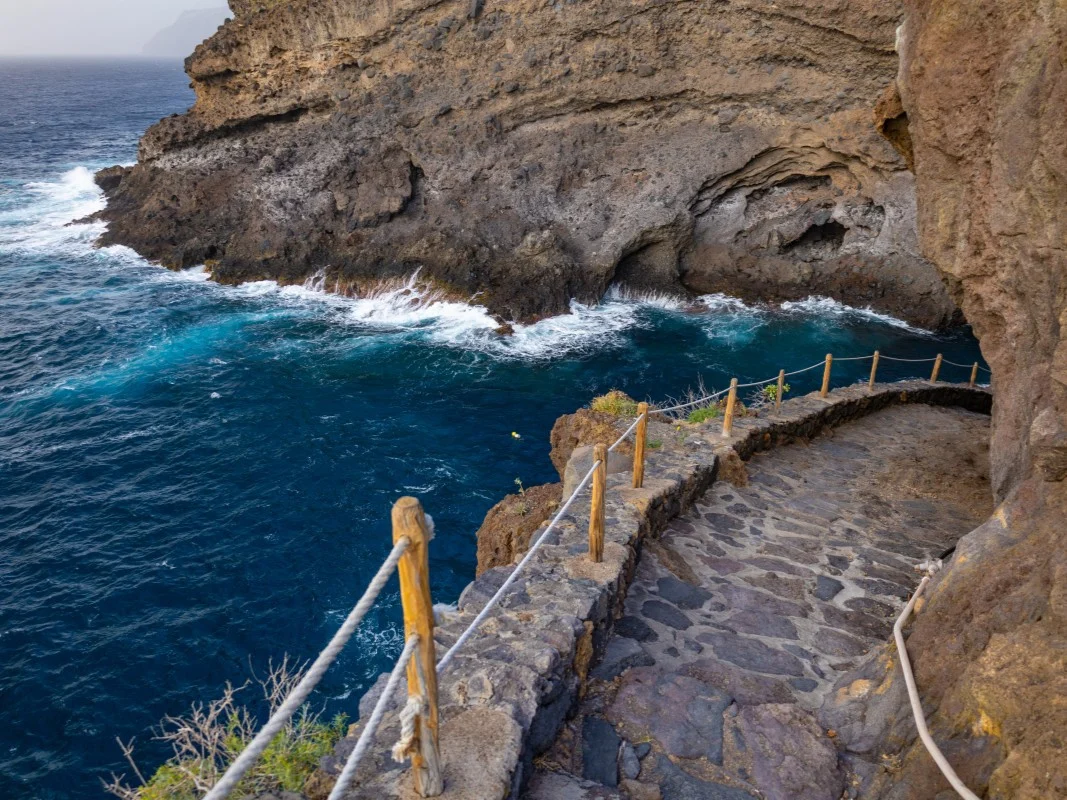
One of the most distinctive hiking routes in Tijarafe descends from the municipality towards Porís de Candelaria. The circular route follows the rugged Tijarafe coastline before reaching this small fishing settlement, built beneath a huge natural cavern.
The official route is approximately 10 kilometres long and takes just over three hours to complete. It is classified as moderate, although the elevation changes make it more demanding than it may look on the map.
Beyond the destination itself, the walk to Porís offers views of ravines, volcanic slopes and different perspectives of the west coast.
Las Tricias and the dragon trees of Buracas
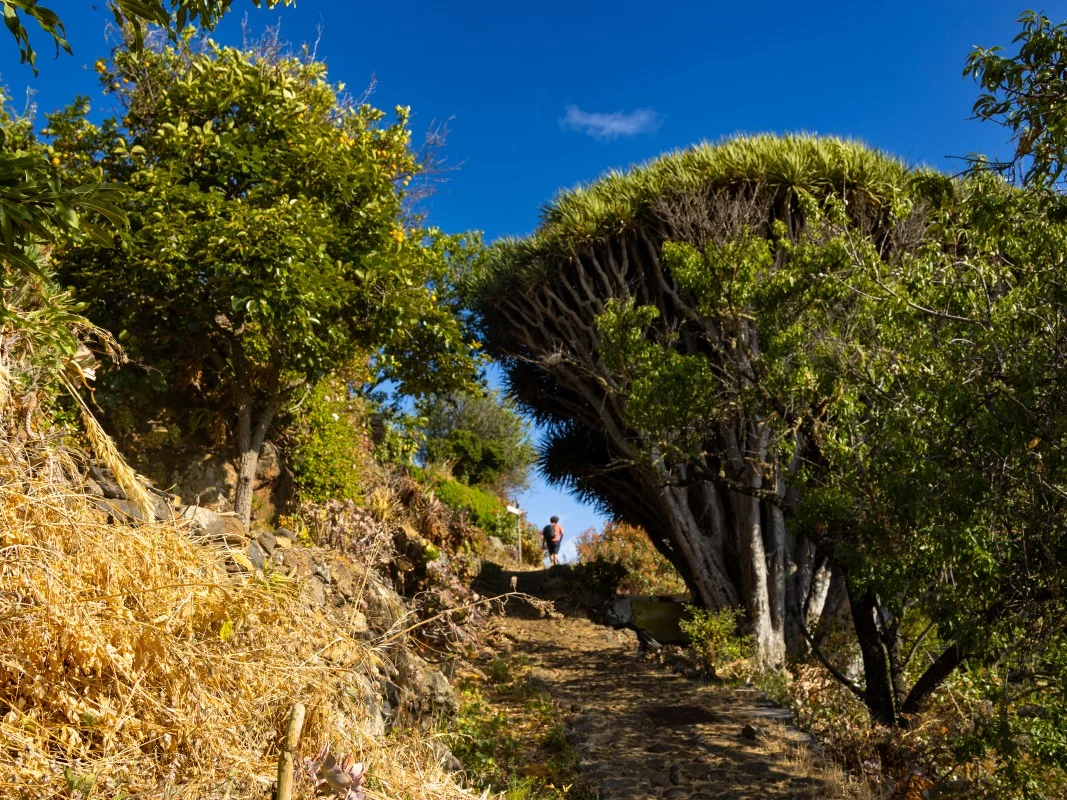
Further north lies Las Tricias, in Garafía. This small village is the starting point for one of the best-known walks in northwest La Palma: the route to Buracas.
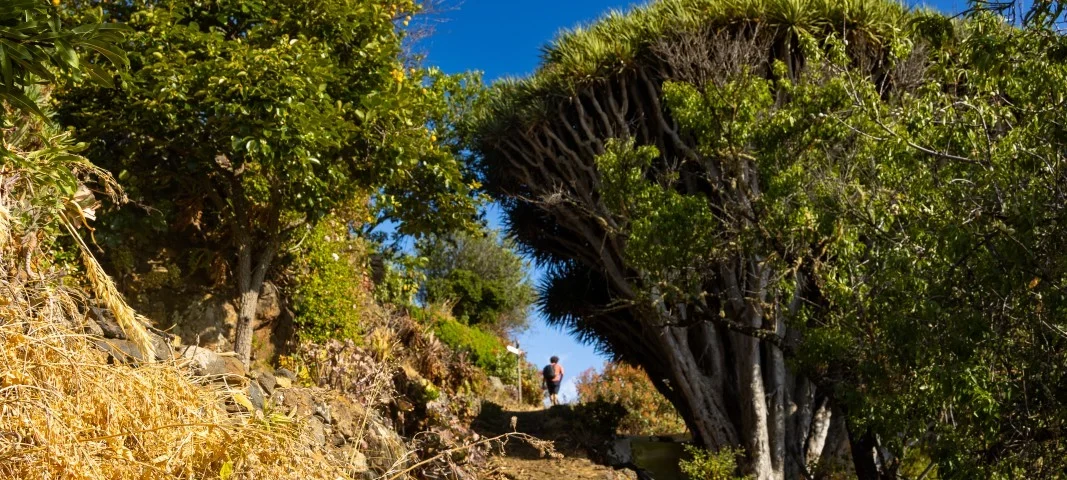
The trail crosses a traditional rural landscape of old paths, Canarian architecture and one of the island’s most remarkable groups of dragon trees. The signposted circular route is about 4.8 kilometres long, takes approximately three hours and is graded as easy.
It is an especially appealing option for anyone looking for a more leisurely day of walking and wanting to discover another side of La Palma’s landscape, away from the major mountain routes.
Hiking in Garafía to discover the wilder north
Garafía offers plenty of options for anyone planning to spend several days hiking in northwest La Palma.
Sections of the GR 130 and various trails connecting small neighbourhoods, ravines and pine forests pass through the municipality. Routes include those around La Zarza, Don Pedro, El Tablado and Roque Faro. Some involve significant distances and elevation changes, so it is essential to choose a route that matches your experience and fitness level.
Roque de los Muchachos is also in Garafía. At 2,426 metres above sea level, it is a high-mountain setting with some of the most impressive panoramic views on La Palma.
Tips for hiking in Tijarafe and La Palma
Distances on La Palma can be deceptive. A relatively short route may include steep climbs, uneven terrain or sections exposed to strong sunshine.
Before setting out, check the latest conditions on La Palma’s official trail network, look at the weather forecast and choose a route suited to your fitness level.
It is also a good idea to bring plenty of water, sun protection, hiking boots or shoes, an extra layer of clothing and a fully charged phone. Always stick to signposted paths and take all your rubbish with you.
Stay in Tijarafe and discover La Palma on foot
After a day of hiking, returning to somewhere peaceful is part of the experience too.
Alisios Retreats offers two private villas in Tijarafe, Casa Piedra y Tea and Casa Yuliana. They provide a convenient base for planning excursions across the west and northwest of La Palma. Both have a heated private pool, a terrace, ocean views and a setting designed for relaxing after a day exploring the island.
Choosing Tijarafe as your base lets you combine hiking, nature and relaxation without filling every day with activities. Discovering La Palma also means walking at a gentle pace, stopping to take in the scenery and making time to enjoy the place you return to.